Friday, 3 June 2011

7 Career Tips For Computer Science Students On Beginnng A Programming Career

A few days Ago, I asked you to email me your most pressing questions on beginning your computer programming career. Read the previous post here:
I received a question from Matthew, an IT Student about how to succeed as a Visual Basic programmer and here is my reply:
  1. Get A Job: Matthew, the most important thing I want to tell you is to get a job as a Visual Basic programmer while you are still in college. You can work the job along with your full time studies or as an intern.
  2. Gain Valuable Experience: If you wait till you graduate from college before getting a job, you will may be in for a surprise. Employers don’t like giving a job to programmers with only a theoretical knowledege of a programming language. Hiring managers prefer students and job candidates who already have some experience building real world software applications.
  3. Understand Programming: Working on real world software projects while you are still in school will help you understand the computer science concepts you are studying. The insight you gain will in turn help you to write better code.
  4. Better Entry Level Position: By working on software projects while studying computer science in school, you will graduate with more experience than your colleagues who don’t. This experience will help you negotiate a higher entry level salary and a better position.
  5. Develop Your Skills: By working on software projects for clients while you are in school, you will quickly discover which aspects of computer programming are in demand and which are not. For example, you may thing that developing compilers is what you will do when you graduate only to discover that web services are in-demand. This information will help you sharpen your skills for a ready market.
  6. Network: By working for an employer while you are in college, you have the chance to create relationships and networks that you can piggy-back on after you graduate. If you do a great job for someone as an intern or as a student software developer, you are more likely to be hired for a full time job than some other computer science college graduate who doesn’t.
  7. Make Money: Matthew, you might get rich programming computers while in college. Both Bill Gates and Michael Dell started their multi-billion dollar business from college. I know 2 college friends of mine who struck it rich while they where in college with a software training contract for a large corporation. The last all the money and went bankrupt within 2 years, but that is besides the point
Matthew, I hope I gave you some valuable information with this post. Please let me know if there is anything else I can do to help your career succeed.

Article Source: it-career-coach.net

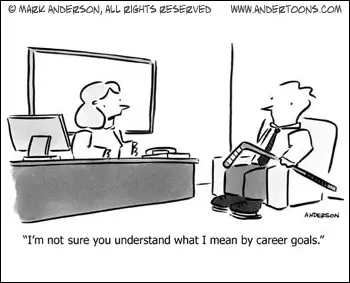
What Are Your Career Goals?

business cartoon
It’s funny how sometimes a good joke is hiding in plain sight.
I read a fair amount of newspaper business sections, listen to a few business-themed podcasts, and follow a good number of business blogs, so I run across the phrase “career goals” not infrequently. It’s so common that after a while you barely notice it.
But one day while waiting for my daughter at soccer, I heard “career goals” go by in a TV sports show and my ears perked up. I had to do a little research into hockey sticks and skates, but I ended up with a nice cartoon a little outside my normal repertoire.

10 Professional Development Tips to Boost Your SEO Career

I present my 10 tips for professional development within the SEO industry. Note that I'm assuming you're already working in SEO at some level. If you're not, then I suggest you read Danny's posts on learning SEO.

While you're reading through this list you might want to motivate yourself by reminding yourself what you can earn at different job levels within the SEO indsutry.

1) Get Qualified

Although I'm not a huge fan of qualifications generally and certainly in the SEO industry they're few and far between, but nevertheless - getting either GAIQ or Adwords qualified will look good on a CV and give you some valuable skills. Not to mention they're pretty easy and cheap so totally learnable in your spare time!

2) Learn Some Secondary Skills

SEO, or more broadly internet marketing, covers such a wide range of topics, skills and industries that it never hurts to have more strings to your bow than just linkbuilding. Try teaching yourself some PHP or CSS. I recently learned a few CSS bits and pieces and they come in handy for styling blog posts (Rob gives a good intro to learning CSS for styling blog posts here).

A side project is a great way of polishing up all your secondary skills, in fact a side project looks great on a CV too as Judith demonstrates here: if your SEO is not moonlighting, fire them.

3) Craft a Kick-Ass CV

When thinking about applying for a job it's crucial to create an astounding CV, but SEO doesn't offer too many transferable skills does it? Think again. Instead of putting things like "linkbuilding" on your CV, take a look at Rand's post on skills that have served him well. All those skills would stand out on a CV. Also worth taking a look at is Rand's whiteboard friday on how to get an SEO job.

4) Do Some Agency Time

If you're working in-house then that's great and I'm in no way trying to suggest that SEOs who work at agencies are better at SEO. But, it has to be said that working agency side you get to work on many more industries than you would otherwise. You can work on news websites, ecommerce websites, lead gen websites and a whole lot more! Getting experience working on a broad range of sites can really help make sure you're up to speed on all the different niches of SEO - whether it's local, image search, video search or product search.

On the flip-side, if you're working agency side then consider working in-house for a bit. You'll get experience in reporting to a board as well as having to experience first-hand the challenges of getting buy-in from other departments. All useful experience.

5) Immerse Yourself in Excel

I've raved about Excel a lot in the past so I won't do so again here. That said, there are two crucial skills that will help you get a better job and Excel can help both of them. They are reporting and data analysis. Reporting is essential whether you're working at an agency and need to report to clients or are working in-house and need to report to a board or your boss. Data analysis is essential to ensure that your report is always positive (I'm only half joking here...!).

In summary, if you don't know how to put graphs and charts into your reports then you won't get very far, as this chart shows:


Figure 1


6) Present At A Conference

Presenting at conferences is good for so many different reasons. Networking, making friends, having fun, experience in public speaking etc etc. I really love speaking at conferences and you should too. Having it on your CV can really make you look like an expert. And actually speaking is easy - just watch out for the speaker submission forms at SES, SMX, Adtech and all the rest of the conferences and come up with an appealing pitch.

If that's too daunting, then consider speaking at a smaller conference. I spoke at the first ThinkVisibility in the UK last year and it was only small but lots of fun. This year I'm speaking again and it's going to be a fair size bigger! How did I get to speak? Simple, I saw Dom twitter about wanting speakers for his conference and sent him a DM. If you apply yourself it's that simple.

Once you've been accepted to speak you'll want to take a look at these presentation skills for SEO.

7) Make Friends (aka Networking)


Networking used to be something I hated doing. The idea of making small talk with others in your industry filled me with dread. Then I realised what an awesome bunch of people the SEO industry is and decided that actually it was fun to hang around them, swap emails, twitter etc etc and before I knew it I was networking. So get involved in the local SEO scene wherever you are. In London, that means getting yourself down to LondonSEO. By networking you'll get to know who's hiring, and more importantly whether they're worth working for!

If you want to network slightly more officially then check out LinkedIn - you'll be able to see upcoming job opportunities as well as raising your personal profile. Which brings me neatly to:

8) Build A Personal Brand

Building a personal brand is essential to getting a decent job, especially in the SEO industry. This xkcd sums it perfectly. There's some great blog posts on this topic:
  • WBF - building a personal brand
  • The Layman's Personal Branding Platform
  • SEO Tips for Building Your Personal Brand
  • The Ever-Snarky Rebecca Kelly's Personal Branding + Networking = Job
In summary, get twittering and blogging with a username that's recognisable and consistent.

9) Get Some Management Experience

Here's where you might want to take your career to the next level. If you're looking at trying to transition from an SEO consultant to someone who manages a team you'll need to get some management experience. If there's no opportunity for managing a team where you are right now then a great way to get a bit of experience is to get an intern. It's an easy sell to your boss since you don't need to pay them and it can look great on your CV.

For anyone who's looking to try and up their game as an SEO manager then these two posts from Rich Baxter are essential reading:
  • SEO Management 101
  • Building A Great SEO Team
10) Add More ROI To Every Project You Work On

As the internet grows and as the industry evolves we're all moving towards becoming "online marketers" rather than just "SEO"s. Many of the skills that we know and love from SEO are applicable to other areas that can bring a client ROI. Two classic examples are email marketing and conversion rate optimisation. Get proficient at both of these and you'll make yourself an all-round expert and hard to turn down for any kind of online marketing position. Here's a few primers:
  • Learning a little about email marketing
  • WBF email marketing and SEO
  • Google Website Optimizer 101 (the best page on CRO I know)

Conclusion

In conclusion I just thought I'd mention two things. Firstly, I'm not looking for a job so please hold the recruitment calls - I love working at Distilled and am extremely grateful to Will and Duncan for giving me the opportunity to make it through several iterations of "head of search", here's to the next iteration! Secondly, everyone's different but I strongly believe that it's not all about the money. If you're applying for a new job then please please try and work for a fun company and make sure that you'll enjoy it. Your own enjoyment is far more important than just the $$/££ you'll get paid. Seriously.

Article Source: seomoz.org

100 Best Blogs for Your Job/Career Search

The economic crisis of recent times has left many out of work and having a hard time finding a new job, even with the skills and experience to make them desirable employees. If you're struggling in your job search, you can get some advice, information and leads on potential jobs through some of the great career-focused blogs out there. Here are a few helpful places to get a leg up on finding a new job and getting back on your feet.
General Job Blogs
These blogs address a number of job-related issues, including improving your resume, networking and finding a new job.
  1. Monster Blog: Through this blog you'll get a number of job search tools and loads of advice to help you find the kind of work you're looking for and ease the process.
  2. Applicant: This blog offers readers job-related news as well as tips for marketing yourself and links to some of the best resources on the web for workers.
  3. BostonGlobe Job Blog: Check out this newspaper-based blog to read the latest updates on finding jobs, in the local area and around the world.
  4. Job Hacking: Blogger Dave Hardwick offers his insights into the recruiting process in this blog.
  5. Jibber Jobber Blog: Read articles about what the recession may mean for your job search, tips on using LinkedIn and more on this blog.
  6. Alison Doyle: Visit this blog to read advice and commentary on jobs, careers, work and life.
  7. jobology: This blog, all about jobs, offers inspiration, personal stories and informative articles about searching for jobs and life in the working world.
  8. Here We Are. Now What?: Readers of this blog will find everything from advice for management to personal stories of job hunting.
  9. Employment Blawg: Share your job search experiences and read about the latest work related news with accompanying commentary on this blog.
  10. Insourced: From commentary on current work policies to tips on finding a new job, this blog can be a great resource.
  11. Job Mob: Written by a number of bloggers, this site has loads of advice, tips and articles to offer to readers searching for jobs.
Job Hunting
Check out these blogs for some assistance during your job search.
  1. Career and Job-Hunting Blog: This Quint Careers blog will keep you up-to-date on job search news and provide professional advice that can help make you more successful.
  2. About.com Job Searching: From hunting for jobs on the international scale to tips on making the perfect resume, you'll find it all on this About.com blog.
  3. lachmaba: Check out this video blog to learn more about a variety of job search-related topics.
  4. Job Search Secrets: This blog will help you tweak your cover letter, prep for interviews and hone your job search process.
  5. Adventures of the Job Search Ninja: Blogger Todd Bavol shares his thoughts on job searching in this blog.
  6. Job Openings Blog: Here you'll find all kinds of articles, helping you to find greener work, create a great resume and get the job you want.
  7. Work Bloom: With tips that range from helping workers get ahead in their current positions to helping the unemployed find a suitable job, this blog has a lot to offer.
  8. The Simple Job Search: Learn about the importance of networking, job fairs, how to choose between job offers and more on this blog.
  9. Personal Branding Blog: Part of selling yourself to potential employers is creating a personal brand. Learn how to do so on this blog.
  10. Secrets of the Job Hunt: This blog contains loads of news blurbs from around the nation that can help you determine where the kind of jobs you want may be located.
  11. Finding a Job Soon: Visit this blog to get tips, ideas and resources on the whole job search process.
  12. Jobless and Less: This blogger has experience with layoffs having gone through 4 in only 8 years. Get some advice from the trenches from this blog.
  13. The "MAN" Experience: While this blog touches on a number of topics it does offer a number of tips to help you build your career and find work.
  14. Unemploymentality: The unemployed can commiserate and gain valuable ideas and a few laughs on this blog.
Career Advice
These blogs can help give you a little advice on your career, even if you're in the market for a new one.
  1. Careerealism: This blog comes with the slogan that "every job is temporary," and offers insights into how to change careers and get back into the working world.
  2. Career Renegade: Focused on working happy, this blog offers tips to help you not only find a job but to find one that you actually want.
  3. Jobacle: Here you'll find career advice, employment news and links to web resources.
  4. Career Slave: This blog is home to posts that can help you prepare for interviews, how to approach salary negotiations and more.
  5. The Career Doctor Blog: Get answers and advice on your career-related issues from this blogger.
  6. Career Key Blog: Explore the posts on this blog to get some advice on what might be the best career path for you to take.
  7. Career Hub: Offering advice from career experts, this blog can help you learn to deal with the stress of job loss and get on your feet again.
  8. Career Tips Blog: This blog contains short tips on ways you can advance your career and get hired.
  9. Keppie Careers: Here you'll get advice on career planning, interviewing, job hunting and much more.
  10. Career Marketing Strategies: Read this blog about how to grow and advance in your career even in hard times.
  11. Career Rocketeer: From personal branding to dealing with depression, this blog is full of advice for job hunters.
Resume Help
Make sure your resume is representing the best of you it can by using the tips and advice provided by these blogs.
  1. ResumeBear: Through this blog you'll learn how to do everything from avoiding faux pas on Twitter to building a killer resume.
  2. Career Resumes: Learn how to get your resume out there, network better and even make the most of web tools through this blog.
  3. VisualCV Blog: Get some tips on building a great resume, as well as a number of other topics, on this blog.
  4. Career Pier: Focusing on the troubled economy, this blog offers a range of resume and job search advice.
  5. Resume Help Blog: Visit this blog for quick tips on creating a winning resume.
  6. blueskysresumes: Read this blog to get advice on getting and keeping the job you want-- starting with your resume.
  7. Resume Edge Blog: Learn how to create a resume that conveys exactly why you should get the job from the experts on this site.
  8. Pongo Resume Blog: On this blog you can get advice on dealing with recruiters, avoiding resume mistakes and staying cool in an interview.
  9. Optimal Blog: This blog offers advice on making the optimal first impression.
  10. Resume Boutique: Get tips on looking great on paper and in person from this blog.
  11. CV Resume Blog: You'll learn great ways to make your cover letter and resume stand out from the crowd with this blog.
Freelancing
Those looking for freelance work can make the most of these blogs that are full of information, job leads and help for freelancers of all kinds.
  1. Freelance Folder: This blog is an essential resource for freelancers, offering tons of articles about getting clients, organizing your work and a whole lot more.
  2. Freelance Switch: No matter what kind of freelancing you do you'll find helpful articles, links and tips here.
  3. All Freelance Work: Learn some ways that you can make yourself more successful in the freelancing field through this blog.
  4. Wake Up Later: Those looking to work in the online world will appreciate the postings from this blog on a variety of tech topics.
  5. Freelance Zone: This blog focuses on issues specific to freelance writers and bloggers.
  6. Freelance Venue: Read this blog to learn how to create business plans, use Twitter and more.
  7. WebWorkerDaily: If you design, program or write freelance, you'll find helpful articles for web workers here.
  8. ProFreelancing: If you want to go professional as a freelancer or if you already are, check out this blog for some killer tips on finding work and marketing yourself.
  9. Guerilla Freelancing: This blog contains loads of posts that are helpful to freelancers trying to get clients, manage their lives or get their business together.
  10. Anywired: Online work is becoming ever more common and you can learn how to market and work in this web world from this blog.
  11. Seth Godin's Blog: While it deals with more than freelancing, this blog offers quite a few articles that pertain to marketing, client relations and blogging.
Business News and Information
Help keep yourself abreast of the latest trends, news and issues in the business world through these blogs.
  1. Business Pundit: This blog provides commentary and advice on the working world.
  2. The Career News: Get tips, tools and news to help you build a better career here.
  3. Talking Biz News: Pay this blog a visit to learn where to go to get the best and most useful business reporting.
  4. Business News Blog: With updates on banking, startups, economics and much more this site offers a great collection of business news.
  5. News and Economics Blog: Like the name implies, this blog focuses on providing stories about the financial markets and the latest news.
  6. The Job Market Blog: This blog will keep you posted on the job market and how it changes everywhere in the world.
  7. BusinessWorks: Check out this blog for posts on a wide range of business topics, from staying healthy to the latest news.
  8. Fresh Inc: This business news blog focuses on entrepreneurship, marketing and much more.
  9. All Business Blog Center: From the impact of Twitter on business to the new rules of PR, you'll get tons of business reading from this site.
  10. Business 360: This CNN blog will keep you in the loop about all things business.
Entrepreneurship
For some, the loss of a job can be the push needed to start a business. These blogs can help explain how to get yours off the ground.
  1. Entrepreneur: Get advice on great startup industries, risk management and tips for first time small business owners on this site.
  2. SmallBizTrends: Those looking to start their own business will appreciate the advice on everything from customer loyalty to getting health insurance.
  3. SpringWise: This blog offers a collection of entrepreneurial ideas to spark your interest.
  4. Venture Hacks: If you're planning on starting a business you'll need some funding and this blog can explain how venture capital works.
  5. Just for Small Business: Keep up with trends and information in small business through this blog.
  6. The Entrepreneurial Mind: Read this blog to learn about small business and startup news and commentary.
  7. Startup Spark: This blog is home to all kinds of startup news.
  8. Duct Tape Marketing: Learn some of the most cost-friendly ways to market your small business through this blog.
  9. Young Entrepreneur: Check out this blog if you're fresh out of college or even younger to get advice on starting and running a business.
  10. Work Happy.net: Here you'll find some great resources and information on running your business.
New Graduates
Many graduates fresh out of college are having a hard time finding work in an already over-saturated market. Give these blogs a read for advice catered towards new grads.
  1. The Big Time: Here you'll find real-world advice and insight on finding and keeping a job.
  2. One Day, One Job: This blog focuses on posting interesting and challenging entry-level job opportunities.
  3. Grad to Great: Whether you're still in school or just graduated this blog hopes to give you a few tips to get the job you worked so hard for.
  4. BeyondGraduation: Gain some insights into networking and working after college from this blog.
  5. Water Cooler Wisdom: Get some job and career advice from someone who's been there and done that.
  6. Gradspot: This blog is all about life after college, including the post-graduation job search process.
  7. GrouperEye Blog: This recruiting blog will help you learn some of the ways recruiters may be able to help you find a job.
  8. Employee Evolution: Check out this blog, geared towards Gen Y workers, to find tips on making the most of your college resources, starting your own business and much more.
  9. RiseSmart Blog: Get some tips on a smarter job search and how to more quickly rise through the ranks here.
  10. CollegeRecruiter: Learn more about the recruiting process through this blog.
  11. Lindsay Pollack: From recruiting to making the most of the time you're spending unemployed, this blog aims to help fresh college grads figure out the real world.
  12. Brazen Careerist: Written by the founder of three startups, this blog offers advice to young people just starting out in their careers.
Field Specific
These blogs offer advice focused on a specific field or type of job.
  1. Green Career Central: This blog will give you updates on finding work in green fields.
  2. Science Career Blog: Learn about the latest research developments and funding opportunities in science through this site.
  3. Nursing Jobs: Nurses are in high demand across the nation but many hospitals don't have the money to hire. Learn where you can maximize your career options here.
  4. SalesForce Search: Check out this blog to get some advice on finding a job in the sales field.
  5. Graphic Design Blog: Designers who are looking for work, freelance or full time, will find inspiration and assistance on this blog.
  6. The Working Geek: This blog offers work-related tips for workers in a range of tech fields.
  7. Beyond the Job: Librarians struggling to make a career with their degrees will find some helpful advice through this blog.
  8. Teacher Job Blog: Teachers of all kinds can find work and advice through this blog.
  9. Problogger: Bloggers and online writers can find job leads and advice on finding more success in the blogging world from this site.
  10. Working World: If you work on a global scale you'll appreciate this blog focused on international education, development and exchange. 
Source : jobprofiles.org

    Writing a Career Change Resume Is Easy, Just Follow These Helpful Tips! (Part Two)

    Make Your Writing Effective:
    The following list of resume tips, focuses on how to make your experience and qualification stand out and make an impression.
    • Describe accomplishments, not responsibilities. What you have done in the past gives employers clues and expectations about what you can do for them now and in the future. Use action verbs like Led, Designed, Implemented, Managed, etc.
    • Include RESULTS. What impact did your action have? Ask yourself "so what?" Quantify your accomplishments. Use numbers, dollar figures, and percentages to dramatize accomplishments and convey significance. Describe revenues, profits, savings of costs or time, number of projects, number of people managed or team members, etc.
    • Don't use I or any other pronouns in writing your resume. You can also eliminate a, an, the, etc.
    • Use short, bulleted statements that pack punch and can be easily absorbed by the reader. Don't use twenty words when ten will do.
    • Make sure the writing in your final version is perfect. There's no excuse for typographical errors, etc. Have someone else proofread it.. and again.
    • Produce your resume on a computer and print it using a quality printer. • Print on a high-quality paper. White, Light Gray or Ivory only.
    • If you have less than five years in the workplace, use one page. If more than five years, two pages. NEVER more than two!
    • Use Times New Roman or Anal type font, 11 or 12' point type.
    • 1/2" to 1" margins. Leave some white space. Double space where appropriate. Make it easy to read. Don't strain the reader's eyes!
    • Use full justification, left and right.
    • Remember your resume is a work in progress. Don't hesitate to revise it but don't have too many versions or you will confuse yourself and others.
    Resume Mistakes to Avoid
    • Don't include an objective. Your objective is to get the job that you're sending that resume for!
    • No need to state the obvious.
    • Don't label your resume with the word resume. Your reader knows what it is.
    • Don't include salary history or information.
    • Don't include personal statistics other than contact information.
    • Don't include references, or write that they are available on request. That's obvious.
    • Don't include testimonials or tributes from others.
    • Don't include your photograph unless you're an actor or a model.
    • Don't include hobbies or interests unless they support your job objective. Save these for networking and interviews and use them to enrich your conversations.
    Executive Resume Writing Service Tips
    Sometimes and executive resume writing service may be the best way to get a great resume that speaks to your experience and skills. Here are some key things to remember when choosing an executive resume service.
    Choose your keywords. If you've ever conducted a Google search, you know what a keyword is. It's the specific word or phrase that someone uses to find something on the Internet. The same applies for resumes--which increasingly are sent and received over the web. But however you plan to submit your resume, use keywords to showcase your skills and talents. Translate your military background by relating your skills to the requirements of the private sector organization you're applying to, and use keywords or terms that are known and used in that environment.
    Format for emphasis and readability. Use strong visual aids in your resume, like bullets, headlines, and indentation to grab the reader's attention. You can assume that there are a number of resumes that this reader has to review. In fact, when writing your resume, assume that your readers are actually looking for a reason to not read it, to put it aside and move on to the next one. Don't let them! Stop them in their tracks with relevant content and a high-impact presentation.

    Article Source: http://EzineArticles.com/6313943
    Related Posts Plugin for WordPress, Blogger...

     
    Design by Free WordPress Themes | Bloggerized by Lasantha - Premium Blogger Themes | Hostgator Discount Code